Dan Dillon | Aquaphobix | Ep. 996
TOM ROWLAND PODCAST
LISTEN NOW ON ITUNES, SPOTIFY, OR WHEREVER YOU LISTEN TO PODCASTS
Video goes live at 11:00 AM every Wednesday for Full-Length Episodes
Frequently Asked Questions
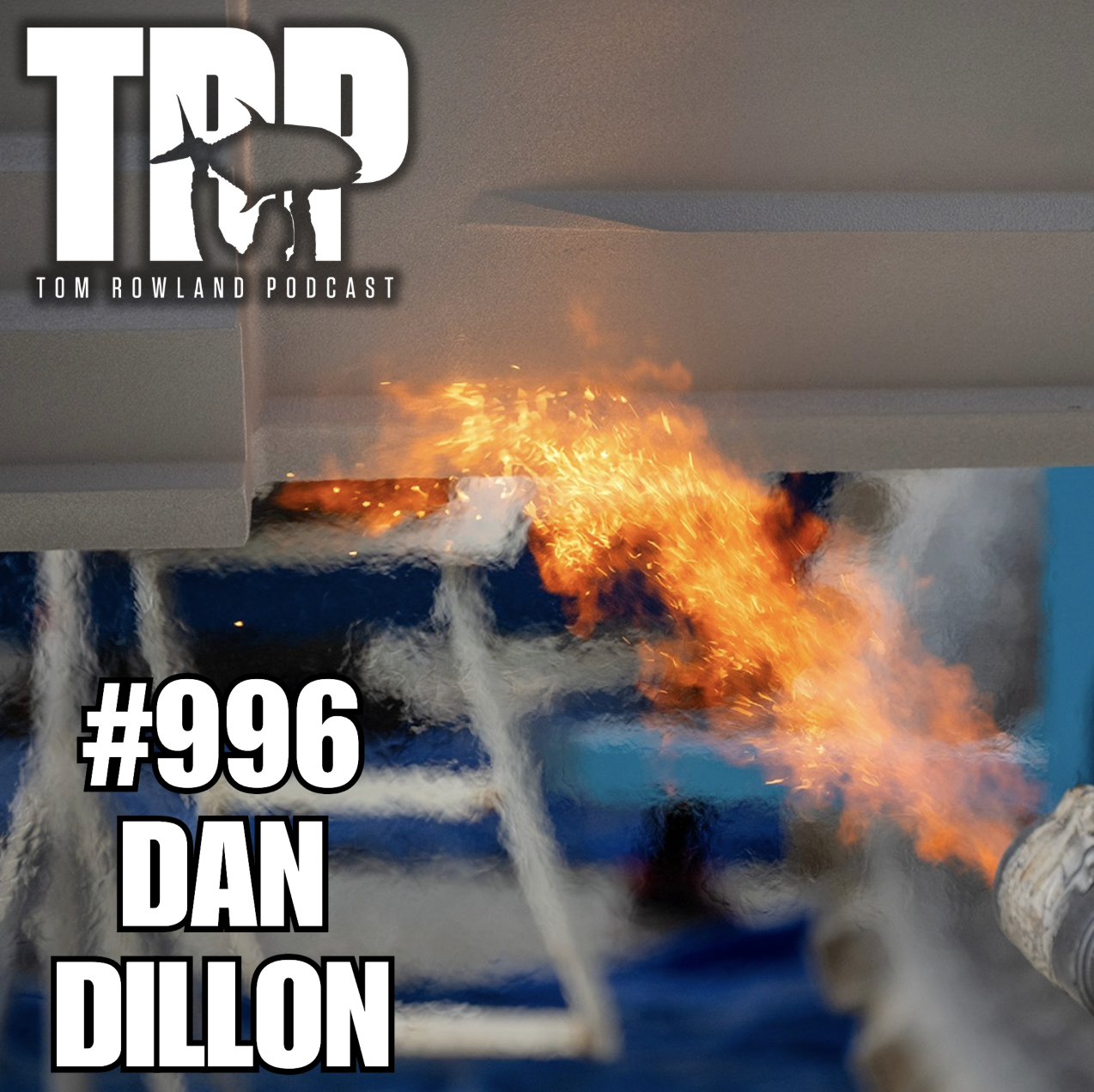
Episode 996: Dan Dillon on Aquaphobix Bottom Paint Alternative
Aquaphobix is a permanent thermoplastic coating that's melted onto boat hulls using a torch, creating an 800+ PSI bond that never sheds or comes off like traditional paint. Unlike ablative bottom paints designed to leach copper and biocides into water, Aquaphobix remains solid on the hull and is certified Marine Life Safe and Drinking Water Safe. The coating lasts five to ten years without reapplication compared to annual bottom paint maintenance, eliminating 70% of traditional maintenance costs associated with haul-outs and sanding.
The torch melts thermoplastic powder as it's pneumatically sprayed onto the hull, fusing it into a solid protective layer. The process is controlled and localized—similar to how Dan's company has safely applied it to thousands of fiberglass swimming pools over seven years without damage. The underlying fiberglass isn't harmed because application is precise and the heat-activated epoxy primer protects the gelcoat. After three coating layers, the bond strength exceeds 800 PSI, which is actually stronger than traditional paint's surface adhesion.
Aquaphobix typically lasts five to ten years without requiring reapplication, while traditional bottom paint needs annual or semi-annual maintenance. Some applications on buoys in northeastern waters have lasted 10-12 years with just pressure washing during routine service. Dan's personal pool installations have maintained integrity for seven years, and boat testing shows zero delamination even at speeds exceeding 60 mph. The extended service life comes from the permanent molecular bond rather than paint sitting atop the gelcoat.
Marine Life Safe certification requires 10-year testing proving the coating releases no substances harmful to aquatic organisms in static water conditions—this is mandatory for facilities like SeaWorld with live animal exhibits. Drinking Water Safe certification means the coating is approved for surfaces that contact human drinking water, like municipal pools and residential cisterns. These aren't marketing claims but rather third-party validations required by institutions where contamination would be immediately detectable and catastrophic, such as the Venetian Pool in Coral Gables where water drains daily into the city aquifer.
Ablative bottom paints are engineered to continuously shed copper and biocides into surrounding water—this is how they prevent marine growth. When divers scrape boats, they're removing paint layers along with growth, releasing copper particles and microplastics directly into marina water. This contamination accumulates in sediment, bioaccumulates up the food chain into fish tissue, and transforms marinas into ecological dead zones. Baltimore Harbor is one example where concentrated boat traffic eliminated all fish populations and aquatic vegetation due to copper contamination.
Greenwashing occurs when companies market products as environmentally friendly while obscuring continued environmental harm. Dan encountered this with major paint brands featuring green labels claiming "no biocides" while still using silicone and materials that shed as microplastics annually. These paints eliminate copper but still come off the boat—just through different mechanisms—requiring frequent reapplication and continuous microplastic pollution. True environmental solutions prove what they don't do (leach toxins) AND what they prevent (shedding material), not just comparative claims about being "less bad than before."
Traditional bottom paint economics break down to approximately 70% labor costs (sanding, surface preparation, haul-out fees, rack fees while boat is out) and only 30% for materials and paint application. Annual costs vary widely based on boat size and marina pricing, but haul-out fees alone can run $8-15 per foot, plus daily rack fees of $250-350, plus sanding labor, plus paint ($500-2,500 per gallon), creating total annual expenses of several thousand dollars. Aquaphobix eliminates most of this by extending haul-out intervals from 12 months to 60+ months.
Yes, the thermoplastic bonds to fiberglass, metal (including aluminum), and concrete. The original industrial application was coating concrete acid-holding tanks, and the technology adapted for swimming pools works on various fiberglass formulations. Metal applications require proper surface preparation similar to fiberglass—sanding to create tooth, heat-activated epoxy primer, then torch application. Dan's company has coated metal structures including industrial tanks and is developing boat-specific protocols for aluminum hulls common in northern regions.
Traditional marina revenue models depend heavily on annual bottom paint maintenance cycles—pulling boats out, charging rack fees, subcontracting sanding work, and taking markup on paint products. When Aquaphobix extends haul-out intervals from 12 months to 60+ months, marinas lose that recurring revenue stream. However, forward-thinking marinas are adapting by becoming certified Aquaphobix applicators, replacing numerous small annual jobs with larger but less frequent projects. The comparison is similar to oar manufacturers resisting engine technology—customer demand eventually drives adoption regardless of incumbent resistance.
The coating doesn't prevent all growth—it's non-ablative rather than biocidal. However, the smooth thermoplastic surface makes growth removal extremely easy. Buoy applications in the Northeast simply require pressure washing during routine maintenance rather than hauling for repainting. Because the coating never comes off, you're not scraping paint into the water along with growth. The environmental benefit comes from zero toxic leaching and zero material shedding, while the practical benefit is simplified cleaning without reapplication cycles.
Yes, California and Washington have implemented restrictions on copper-based bottom paints due to environmental contamination. Dan mentioned that Florida legislation is pending, though implementation timelines remain uncertain given industry lobbying and the state's large recreational and commercial maritime sector. International regulations are typically stricter—most developed nations prohibit products legal in U.S. waters. The regulatory trajectory favors non-toxic alternatives as environmental agencies finally address decades of accumulated marine pollution data.
Application mirrors pool refinishing processes. First, the gelcoat is sanded with 60-grit sandpaper to create proper adhesion. Non-coated areas are masked with fireproof tape. Heat-activated epoxy primer is rolled on like traditional paint. Then three layers of thermoplastic powder are melted on using the torch system. Total time depends on boat size, but the process isn't weather-dependent—unlike traditional paint, humidity doesn't affect application. Smaller boats might take a day while larger vessels require more time. The coating cures instantly, so there's no waiting period before returning boats to water.
Aquaphobix is manufactured by EcoFinish, a Pennsylvania-based family-owned company with revenues in the $60-80 million range, primarily serving the pool and industrial coating markets. Dan Dillon secured exclusive rights for marine applications and is their largest pool dealer. The company operates a dealer network model—marinas can become certified applicators after training rather than Aquaphobix directly servicing all locations. The application equipment comes from Italy, which Dan is visiting to finalize marine-specific modifications. Individual boat owners work through certified marina applicators rather than DIY application.
Field testing shows zero delamination at speeds exceeding 60 mph. The 800+ PSI bond strength means coating withstands high-speed water flow, wave impacts, cavitation, and even minor grounding incidents better than traditional paint, which chips and scratches easily. This durability matters especially for offshore fishing boats, high-performance center consoles, and commercial vessels running continuously. Unlike bottom paint that degrades and requires touch-ups between annual applications, Aquaphobix maintains integrity throughout its five-to-ten-year service life regardless of usage intensity.
Microplastics from marine paint fragment into increasingly smaller particles that fish ingest, bioaccumulating up the food chain into species we consume. Modern medical testing can detect microplastics in human bloodstream, with physicians able to identify whether patients regularly consume water from plastic bottles based on blood analysis. These particles cause various health issues that researchers are still documenting. Dan notes this problem motivated him to stop drinking from plastic bottles after learning about coating industry contributions to microplastic pollution—billions of square feet of hull surface shedding material into waters where we harvest seafood.
If you’ve seen that viral clip of a guy using a blowtorch on the bottom of a boat… this is that guy. Dan Dillon took a heat-applied pool coating and brought it to the waterline, rethinking how we protect hulls without dumping copper and microplastics into the places we fish. Today, we talk about what Aquaphobix actually is, how it’s applied, what the certifications mean, and whether this can scale from center consoles to cruise ships.
What Aquaphobix Is (and Why the Torch)
Dan started as a pool contractor. He found a pneumatic thermal plastic that bonds to fiberglass, metal, and concrete. The boat process mirrors pool work: sand the gelcoat, roll on a heat-activated epoxy, then spray a dry powder through a flame. It fuses, layer by layer, into a non-ablative skin with high bond strength.
The Problem with Traditional Bottom Paint
Ablative paints work by coming off. Divers scrape, paint sloughs, and those flakes carry biocides (often copper) and microplastics into marinas and bays. Performance drops as growth builds, fuel burn rises, and we all pay for more haul-outs and sanding.
Certifications that Actually Matter
This isn’t a “green” sticker on a can. Aquaphobix is Marine Life Safe and Drinking Water Safe — criteria that matter at places like SeaWorld and municipal pools. If you’re coating a surface that touches dolphins… or the city aquifer… the product can’t leach.
Case Studies: SeaWorld & The 102-Year-Old Venetian Pool
Dan’s team coated exhibits that required continuous air-quality and leachate monitoring. In Coral Gables’ historic Venetian Pool, the city aquifer both fills and receives pool water — so coatings had to be safe enough to drain downstream. Where traditional paint chipped into the system, Aquaphobix eliminated that problem.
Marina Economics & ROI
Seventy percent of “bottom paint cost” is often prep and sanding, not the paint. If a non-ablative coating means fewer haul-outs and less sanding, the math changes for owners (even if marinas need to rethink the revenue model). Add the performance benefit of a cleaner hull, and the ROI starts to look compelling.
Can This Scale? From Buoys to Big Ships
From long-soaked buoys to cruise ships that get fined in foreign ports for what comes off their hulls, the incentives to reduce leaching are real. Dan’s in patent-pending territory and exploring larger-vessel applications.
If you have questions or suggestions for the show you can text Tom at 1 305-930-7346 or contact Tom through email: Podcast@saltwaterexperience.com
You can follow Tom Rowland on Instagram @tom_rowland
Learn more about Tom’s Television show http://www.saltwaterexperience.com.
The Tom Rowland Podcast is presented by Star brite!
Clean and protect with Star brite, a leading manufacturer of appearance, maintenance, and performance chemicals and accessories, serving the marine, RV, automotive, powersports, hardware, and home care industries for over 50 years. Headquartered in Fort Lauderdale, FL, and with its manufacturing plant in Montgomery, AL, the company produces “Made In The USA” products, including its flagship ethanol fuel treatment, Star Tron Enzyme Fuel Treatment.
Check out Star brite’s Website Here: https://bit.ly/TomRowlandPodcast
This episode has been brought to you by Waypoint TV. Waypoint is the ultimate outdoor network featuring streaming of full-length fishing and hunting television shows, short films and instructional content, a social media network, Podcast Network. Waypoint is available on Roku, Samsung Smart TV, Amazon Fire TV, Apple TV, Chromecast, Android TV, IoS devices, Android Devices and at www.waypointtv.com all for FREE!
Join the Waypoint Army by following them on Instagram at the following accounts
@waypointtv @waypointfish @waypointsalt @waypointboating @waypointhunt @waypointoutdoorcollective
Find over 150 full episodes of Saltwater Experience on Waypoint